 By
By If you spend any time on Instagram, Twitter, Facebook, or TikTok, odds are you’ve encountered the term “body positivity.” While the movement has become rapidly wide-spread, many advocates feel that its lost sight of its origins and drowns out the very voices who need it most.
The Movement’s Origins and Shift to Online Spaces
The body positivity movement began as a political movement in the 1960’s and 70’s. The movement originally centered around advocacy for fat people and black people, but it grew to include advocacy for queer people, disabled people, chronically ill people, and other marginalized groups.
As technology developed, the movement shifted from localized, grass-roots efforts to more online advocacy. This shift towards online spaces paved the way for marginalized groups to create communities, share ideas, and champion each other without the physical risks incurred by local gatherings and protests. However, it also exposed the entire digital world to the movement and provided the opportunity for it to be co-opted by non-marginalized groups.
Marginalization
If you’re saying to yourself “Hang on – I thought body positivity was for everyone, so how can it be co-opted? Aren’t all bodies worthy?”, you’re both right and wrong. All bodies are worthy, and the movement wholeheartedly supports that statement and encourages everyone to practice body acceptance.
However, not all bodies are marginalized.
According to Merriam-Webster, to marginalize a group of people means “to relegate to an unimportant or powerless position within a society or group,” where relegate means “to send into exile.”
Fat, black women were heavily marginalized and oppressed in the 60’s and 70’s. They fought back by creating the body positivity movement to challenge societal notions of what is considered beautiful or acceptable, protest industries and systems that reinforce harmful, hateful, exclusionary ideals, and demand equal representation in mainstream media and equal protection in policy. Incredible progress towards equality has been made today, but there is still much to do in terms of solving accessibility, visibility, and policy issues, such as workplace discrimination.
For example, did you know that you can be legally fired from your place of employment in the United States for simply existing in a fat body, no matter your qualifications or value as an employee?
“Federal anti-discrimination laws protect employees from being fired based on certain characteristics, such as race, gender, age, religion, or disability. However, weight is not a protected characteristic under federal law. Right or wrong, this means that employers can legally fire or take other negative actions against employees for being overweight.”
–Sachi Barreiro, attorney
The Issue
To circle back to the issue at hand – yes, all bodies are worthy, but no, not all bodies are marginalized.
Anyone can be subjected to cruel, body-shaming tactics. Anyone can struggle with negative body image, but unless you face a lack of policy protection or equal representation based on your body’s size, shape, ability, orientation, or color, you do not face the oppression and marginalization that the founders of the body positivity movement face, which is why many advocates are upset over today’s “representation” for the movement.
If you look up #bodypositivity on Instagram, this is a typical example of what you’ll see at the top of the hashtag:
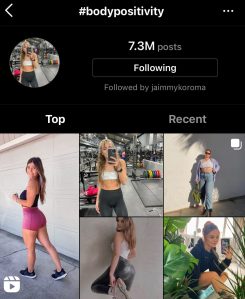
Having advocates within the movement of all body types is important, and it’s crucial to note that it’s not always immediately apparent whether or not someone is living in a marginalized body. Many chronic illnesses and disabilities are not outwardly visible.
However, the issue is that the movement is no longer centered around those that founded it and need it most. Instead, the movement includes these groups, but it no longer puts them at the forefront of media representation and advocacy, as you can see by what’s at the top of #bodypositivity. The marginalized groups who started this movement are often left out of the mainstream narrative of the movement they created, and it leaves many advocates feeling rightfully frustrated and disheartened.
What We Can Do
One of the best ways to combat this issue is to try and re-center advocates within the movement who educate others on the movement’s origins and advocacy, such as Stephanie Yeboah and Megan Jayne Crabbe (aka @bodyposipanda).
In addition to re-centering the movement, we can:
- actively listen to what marginalized people have to say about the discrimination and lack of access they face;
- educate ourselves on the history and type of oppression these groups face to better understand what we’re fighting against;
- get involved with policy advocacy at the local level.

 Ris Writes